DIGITIZING RITES: CURLEW’S LAMENT
Folklore Research Group, University of Worcester
Folklore Research Group, University of Worcester
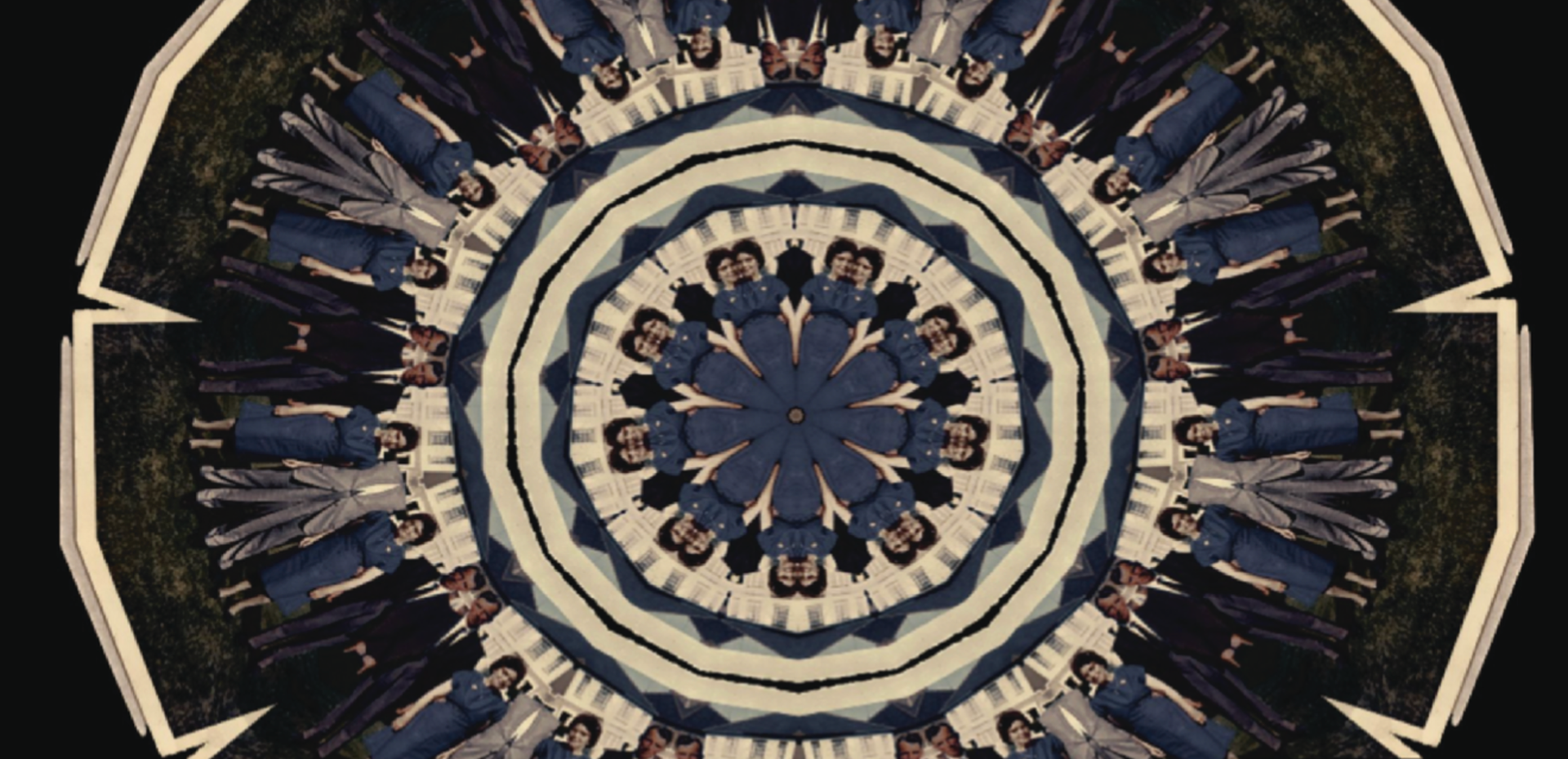
Irish Keening as Affective Technology
Irish keening represents a pre-Christian socio-technical system for managing the affect of grief. Rather than a purely religious rite, it functioned as a ritual interface designed to modulate the physiological and emotional intensity of loss. The keener acted as a facilitator, bridging the gap between material social structures and the psychological state of bereavement. This communal practice framed grief not as a linear event, but as a somatic process requiring a specific acoustic and social architecture to navigate.
Beginning in the 6th century CE, the consolidation of ecclesiastical authority by the Catholic Church erased autonomous mourning rituals. This transition represents a top-down shift in ritual epistemology: the decentralized, embodied "tech" of the keener was replaced by the centralized, institutional liturgy of the priesthood.
Reanimation: The Digital Keening Portal
This project utilizes speculative design frameworks to investigate how suppressed modes of agency can be re-encoded within contemporary digital environments. By framing the digital realm as a site for "embodied affect" rather than mere data consumption, the work creates a cartography for modern mourning.
The Installation: An Interactive Affective Interface
The centerpiece is a "keening portal", an interactive installation functioning as a moving-image "ladder."
The system architecture includes:
User Input: Visitors contribute ancestral portraits, integrating personal data into a collective visual field.
Acoustic Layering: A generative audio composition weaves the "sonic signature" of the Curlew (a traditional bio-indicator of grief) with archival and reinterpreted vocalizations.
The Speculative Space: This audiovisual assemblage acts as a functional prototype for a modern digital imaginary, transposing ancient grief-processing technologies into a contemporary, mediated context.
-
Sources & References:
Flame Wars by Mark Dery foregrounds the hybridization of technology and identity within virtual communities, marking it as a critical work for cognitive cartographies of digital culture.
Adrienne Rich’s essays Ghostlier Demarcations and Keener Sounds address the auditory realm of poetry and considers politics of voice, mourning, and the sonic articulations of grief. Together, these essays define the materiality of sound and language as tools for contesting hegemonic structures.
MALLORCAN FOLK VERNACULAR: NEUENDORF HOUSE
Architectural Association Visiting School
Architectural Association Visiting School
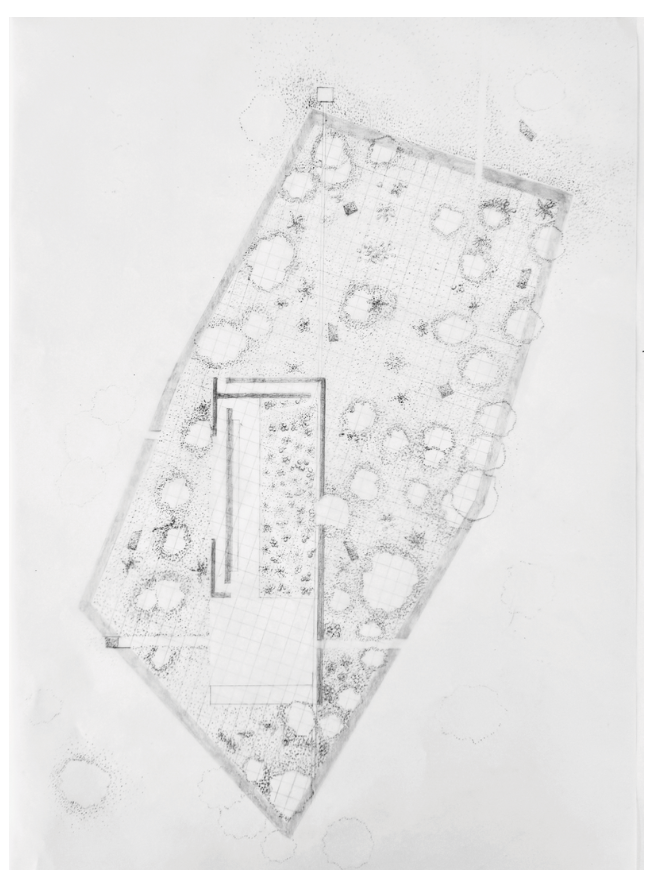
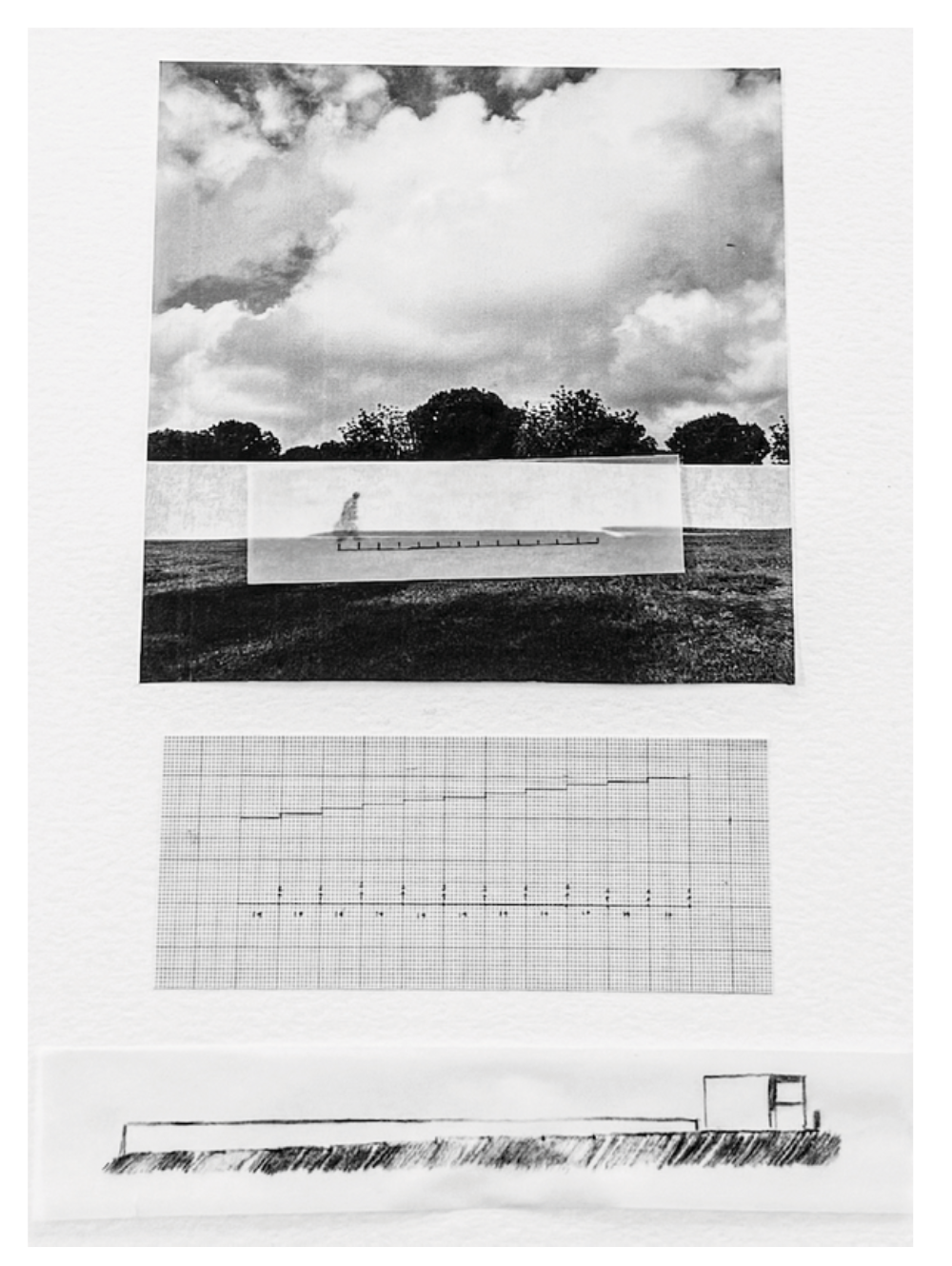
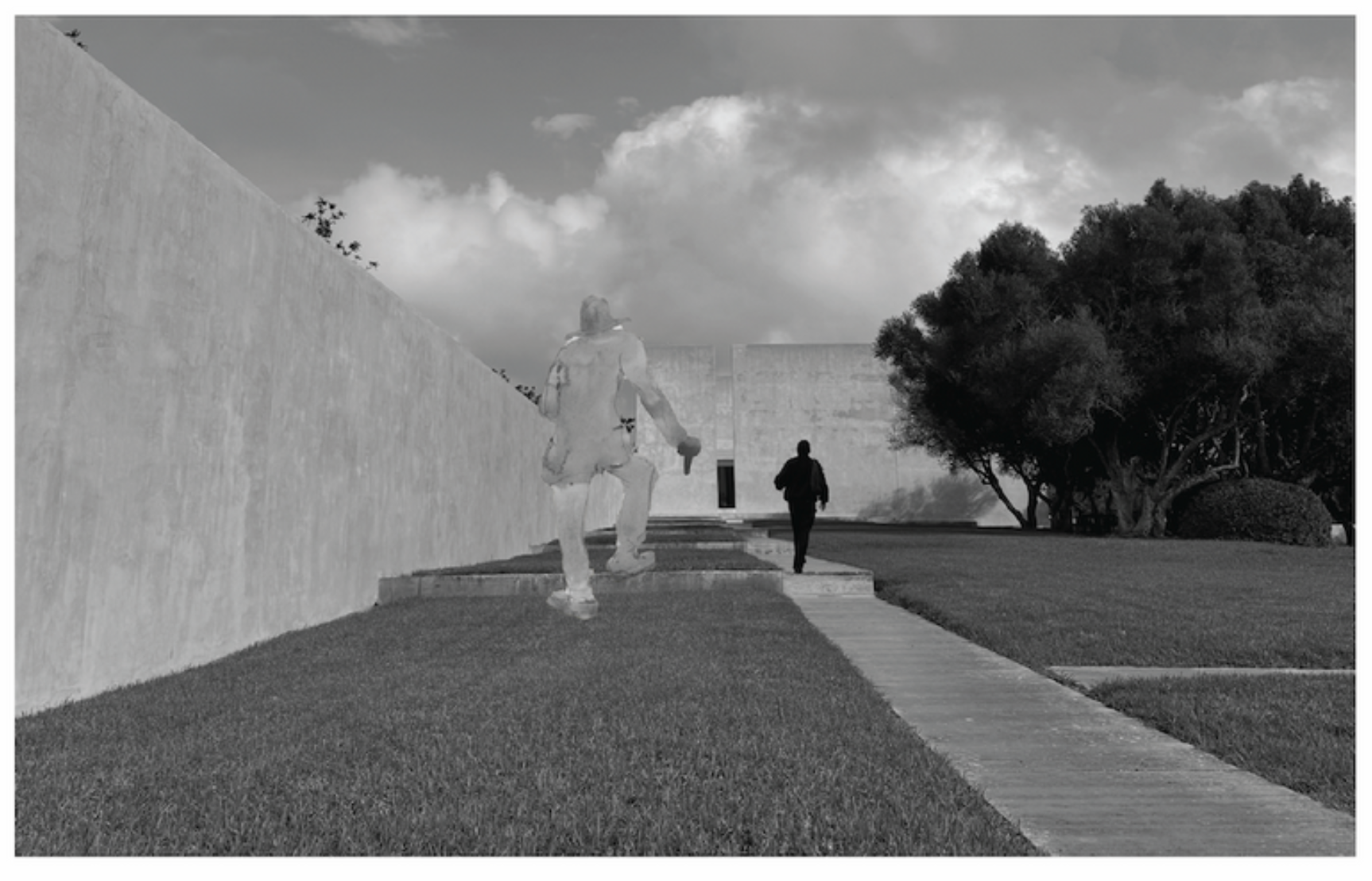
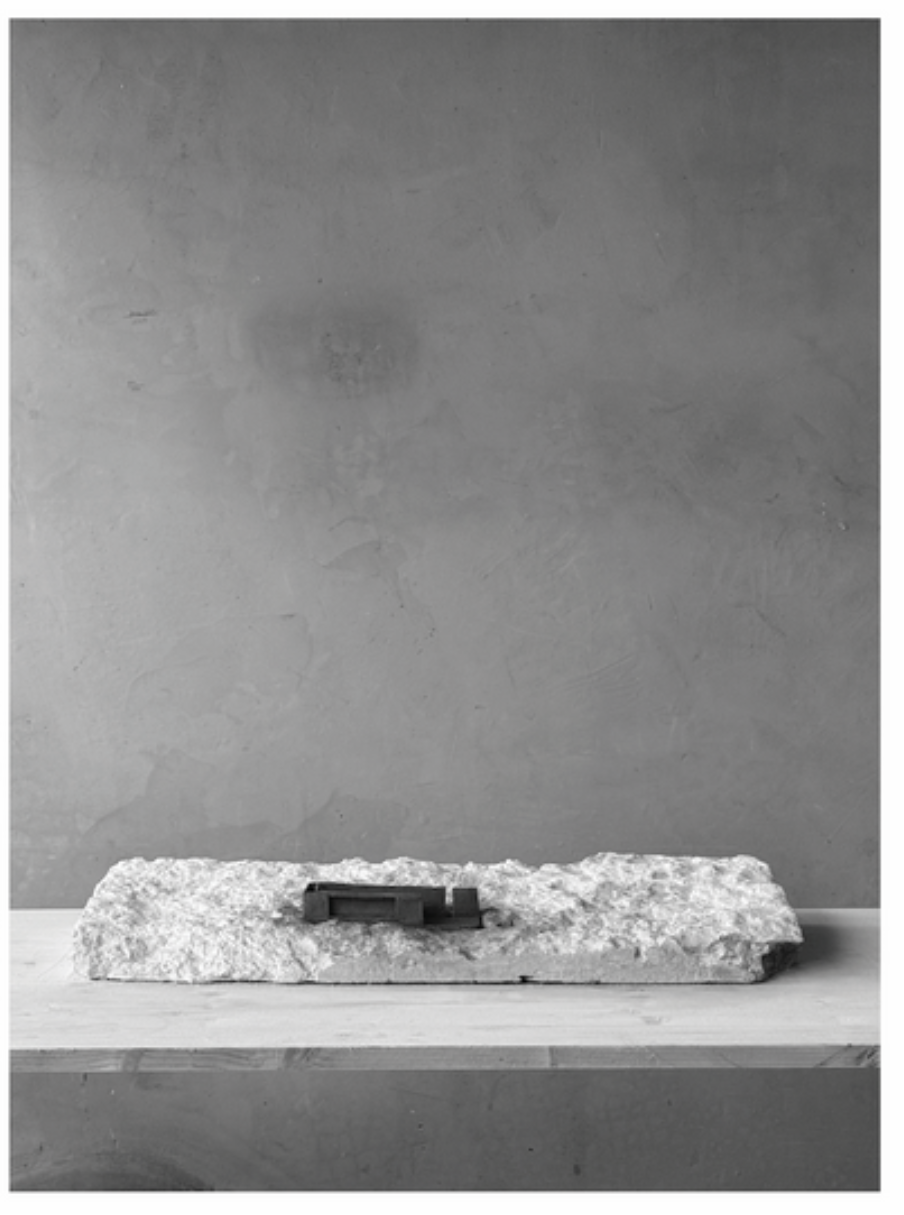
This research investigates the vernacular legacy of 17th-century Mallorcan folk entremeses (theatrical performances), specifically the removal of theatrical giants figures later categorized as "farcical" by the Roman Catholic Church to justify the erasure of independent performances from the public sphere. This project treats the "giant" not as a folkloric character, but as a defunct scalar metric that once informed Mallorcan craft society. By identifying vestigial traces of this "giant-scale" in the island's vernacular architecture (e.g., Talaiots, Navetas, and Cyclopean Masonry), a design taxonomy is identified for the Neuendorf House Cactus Garden that functions as a site of cultural preservation.
Site Strategy and System Architecture
The garden design utilizes spatial choreography and material tension to re-encode this lost historical context into the landscape. The intervention is defined by four primary design maneuvers:
Multi-Axial Orientation: The retention of the primary entrance is augmented by three access points (South-meadow, West-forest, East-seedling house), establishing a choreographed navigation map of the site that mirrors main house access.
Scalar Distortion (Hardscape vs. Softscape): A deliberate tension is created between the "hardscape" perimeter, utilizing agave, opuntia, and marès stone benches of exaggerated, giant-like proportions, and the controlled "softscape" of the interior specimen garden.
Architectural Mirroring: An enclosed garden pavilion, constructed from marès stone, mirrors the volumetric dimensions of the Neuendorf House, creating a formal dialogue between the contemporary built environment and the natural setting.
-
Design Methodology: Site Archaeology & Narrative Reconstruction
The design process for the Neuendorf Garden follows a three-stage methodology that treats the landscape as a "palimpsest" - a surface where multiple layers of history have been written, erased, and overwritten.
Stage 1: Archiving: The process begins with "mapping the absence." By cross-referencing 17th-century ecclesiastical bans with Mallorcan folklore, cultural imprints are identified that were removed from the site (the entremeses and their giants). This stage establishes the narrative constraints for the design.
Stage 2: Scalar Extraction: Analyzing existing "Cyclopean" masonry and vernacular structures on the island to extract a scalar DNA. By measuring the proportions of these ancient "giant-scale" elements, a set of design metrics is identified and applied to the garden's hardscape.
Stage 3: Narrative Mapping: Inspired by Peter Brook’s The Empty Space, the final stage is to "script" the user’s movement as in theatrical performance. Each entrance and path is a "scene transition" that mirrors the dimensions of the main home, moving the visitor between the rigid architecture of the house and the "undesigned" relief of the wild meadow.
-
Sources & References
The Empty Space by Peter Brook is an inquiry on theatre. Brook divides the theatrical world into four realms: the Deadly, the Holy, the Rough, and the Immediate, each embodying distinct ideological and aesthetic orientations. The text strips theatre of its illusions, positing instead its role as a liminal state: an encounter that is at once tacit and spontaneous.
Eurhythmics in Texts on Theatre by Richard C. Beacham emphasizes the importance of rhythm and movement in Adolphe Appia’s approach to performance.
Sub-Urbanism and the Art of Memory by Sébastien Marot studies landscape design and urbanism as a palimpsest where design serves as a tool for recovering spatial memories.
IRISH HEDGE CHAIR
Independent Research
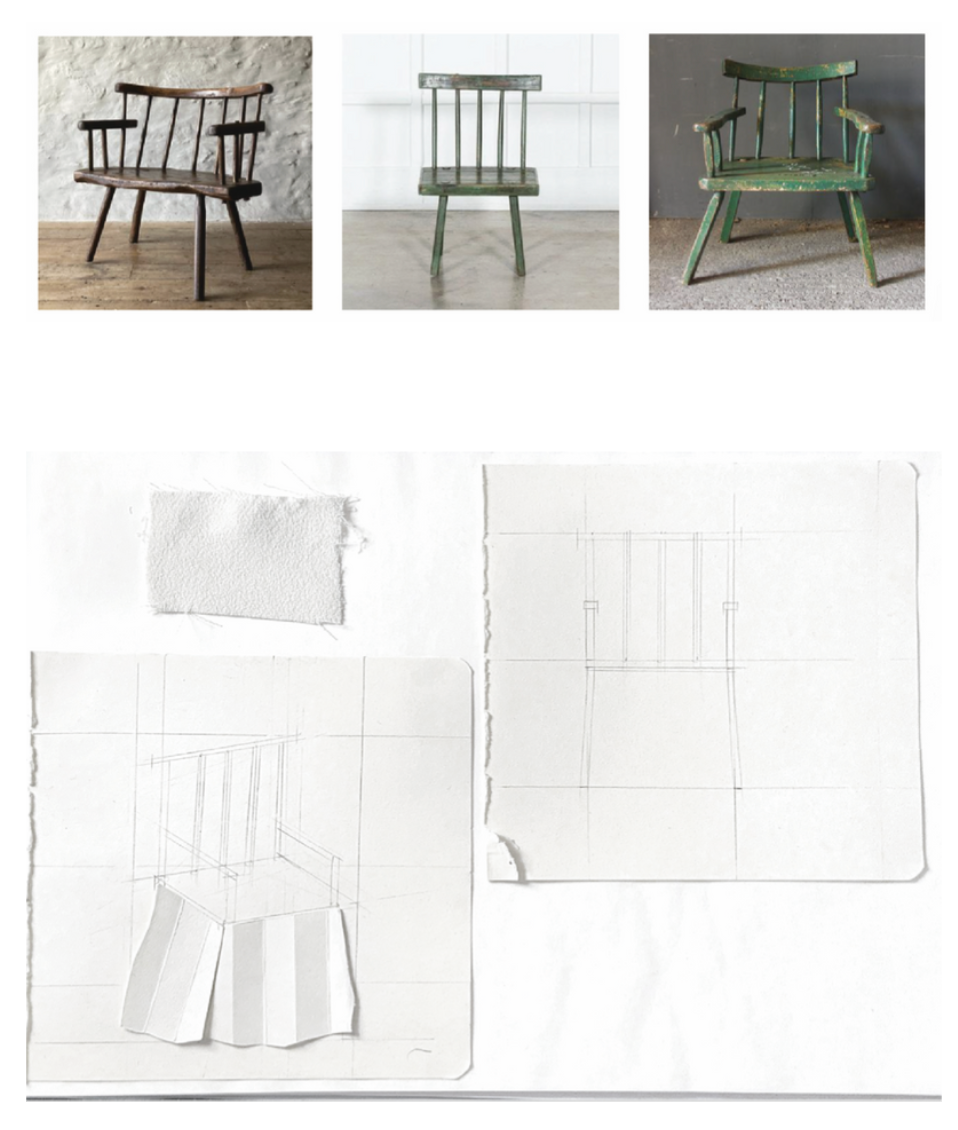
The Irish Hedge chair is emblematic of 18th and 19th century Irish vernacular furniture. Associated with the self-reliant, agrarian lifestyle of pre-industrial Ireland, the Hedge chair reflects the ingenuity of communities that adapted to limited resources and material constraints.
In neighboring England, 17th and 18th century Baroque and Rococco influences defined interior design trends, namely the furniture skirt. These skirts, often heavily draped, concealed legs which were considered to be utilitarian - a trait that warranted distance from the aristocracy and gentry. The Victorian period of the 19th century witnessed a continuation of this trend, and the skirted chair became a fixture.
Contemporary furniture makers allude to the hedge chair as a reclamation of Ireland's design history, and continue its legacy as an insignia of rural communities. This design combines these origins with decorative trends of a colonial class, reflecting an aesthetic and cultural interplay between necessity and aspiration.
In neighboring England, 17th and 18th century Baroque and Rococco influences defined interior design trends, namely the furniture skirt. These skirts, often heavily draped, concealed legs which were considered to be utilitarian - a trait that warranted distance from the aristocracy and gentry. The Victorian period of the 19th century witnessed a continuation of this trend, and the skirted chair became a fixture.
Contemporary furniture makers allude to the hedge chair as a reclamation of Ireland's design history, and continue its legacy as an insignia of rural communities. This design combines these origins with decorative trends of a colonial class, reflecting an aesthetic and cultural interplay between necessity and aspiration.
REVERSE LOST WAX CASTING
Architectural Institute of Paris
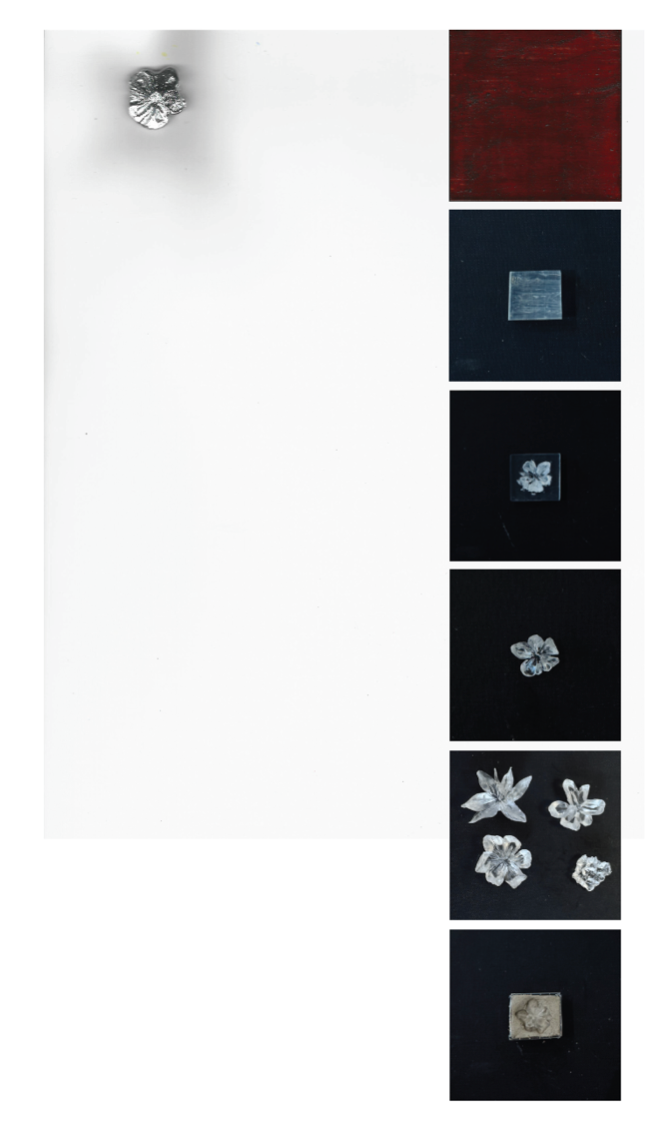
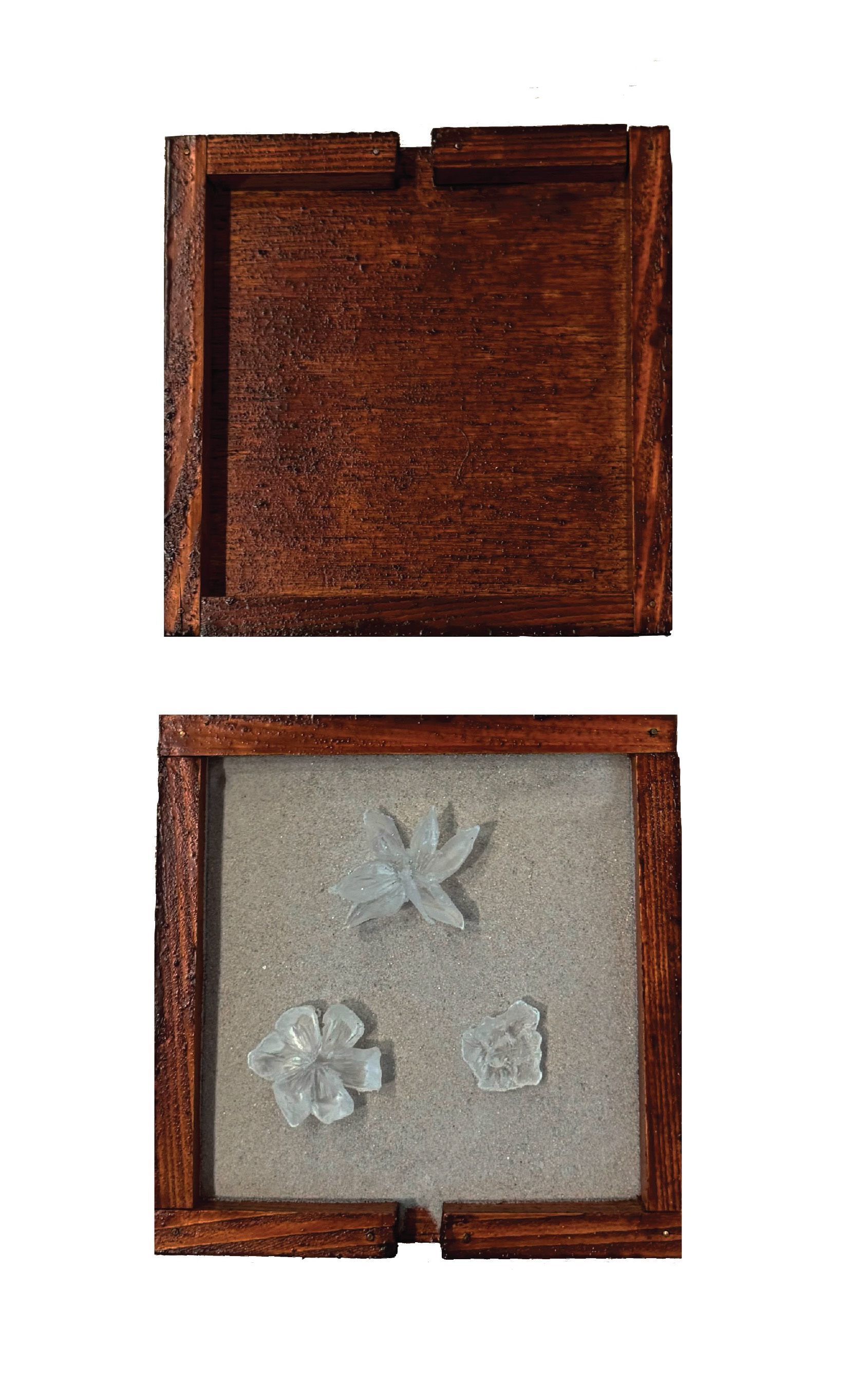
Reverse Lost Wax Casting technique for low-melting point metals
In Progress: PETER BROOKS & THEATRE DES BOUFFES DU NORD
Architectural Institute of Paris